

Career
Build the portal, then stay on it.
Navsha IT INC hires people who can ship AI automation, client portals, and API integrations.
Write to the team50+
Tech engineers
15+
Years of delivery
20+
Countries served
1
Email for applications
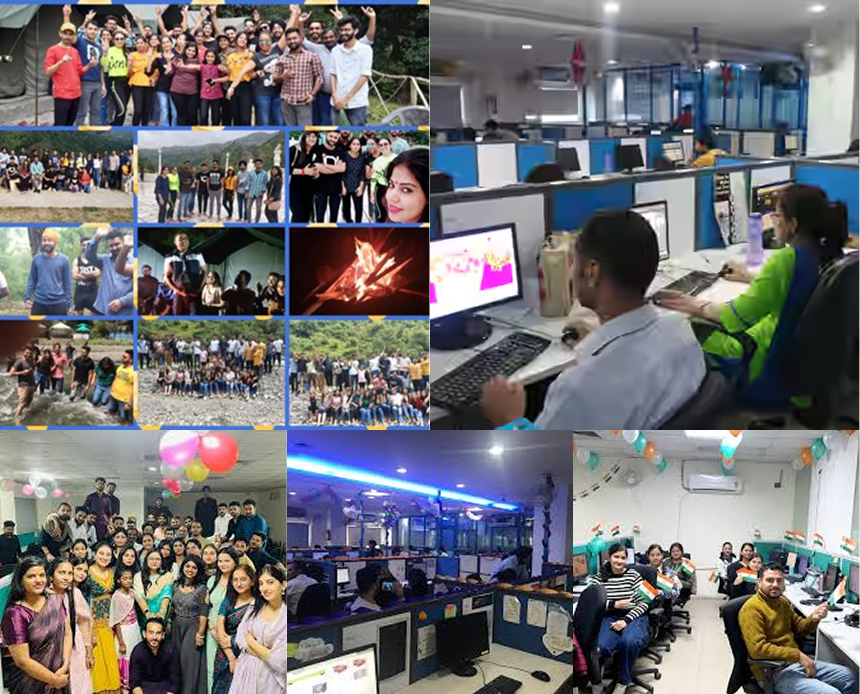
Career at NAVSHA IT
The team designs the workflow, connects the API, and puts the result in a portal a client can use. Designers, frontend engineers, automation engineers, and integration engineers sit on the same delivery.
Clear notes matter as much as the pull request. The next person on the account should be able to see what was decided.
Applications go to info@navsha.com. Tell us the role and include a link to something you have shipped. A short note is enough to start.
Open roles
Each role is a part of the same platform: the screen, the workflow, the API, or the design. The descriptions below say why the role exists, what you ship, and how the work is judged.

Next.js, React, TypeScript
Frontend Engineer
Build the portals and dashboards clients open every day. Screens stay close to live API data, with Tailwind and a layout a teammate can extend.
- Why
- The portal is the product the client sees. If the screen drifts from the API, people go back to the old login.
- What
- Next.js and React screens for accounts, status, and the next action. TypeScript, Tailwind, and components another engineer can change without a rewrite.
- How
- You work next to the integration engineer. A field appears on the page only when the API can supply it. Empty states and failed syncs are part of the screen, not an afterthought.

n8n, Make, Zapier
Automation Engineer
Design the workflows that move leads, follow-ups, and handoffs. A workflow is done when a person no longer has to chase the same step.
- Why
- Repeated steps fail when they depend on memory. The portal can show the work, but something still has to move it.
- What
- Workflows on n8n, Make, and Zapier, plus the handoff into a custom GPT or a person. Leads filed, reminders sent, and exceptions raised where a person can see them.
- How
- You write the steps the team already follows, then remove the ones a system can run. A failed run is visible in the portal. A successful run does not ask anyone to check a second tool.

APIs, Node.js, FastAPI
Integration Engineer
Connect the APIs a SaaS product exposes. Accounts, billing, and support stay in sync with the portal, and failures are visible to the team.
- Why
- The dashboard is only as current as the connection behind it. A silent failure sends the team back to the export.
- What
- API connections in Node.js and FastAPI. Read the objects people copy by hand. Write back when a person acts. Log the sync the team can see.
- How
- You map what each product exposes before the screen is promised. If an API cannot support the job, that limit is written into the scope. The first connection is the record people already copy.

Portals and campaign graphics
Product Designer
Shape the interface and the visuals that ship with it. The portal should be clear before anyone is asked to learn another login.
- Why
- A portal and a campaign that look like two companies are harder to trust. The interface also fails when it draws a field the API does not have.
- What
- Portal layouts, campaign creatives, and the graphics that sit on a dashboard the automation is already updating.
- How
- You sit on the same delivery as the engineers. The layout follows the records the connection can show. Clients should understand the screen before they are asked to retire the old login.
What the work is like
01
Client work, not a bench
You ship portals and automations that a business uses. The account is real. The login you build is the one their team opens.
02
A stack you can name
Next.js, TypeScript, n8n, Make, Zapier, OpenAI, and the APIs those products expose. The tools on the site are the tools on the job.
03
Written down, then built
Decisions are written before a screen is promised. A teammate can pick up the portal without reconstructing the last call.
04
The same account, longer
Clients stay. You will often extend a portal you already know instead of restarting from a blank brief. The first release is the start of the platform, not the end of the contract.

Send a note to info@navsha.com.
Tell us the role and the work you have shipped. A short note and a link to something you built is enough to start.